


About Us
A platform created to highlight youth voices, share meaningful perspectives, and spark change through honest stories—one thought, one voice, one impact at a time.
globalvoiceforeducation@gmail.com
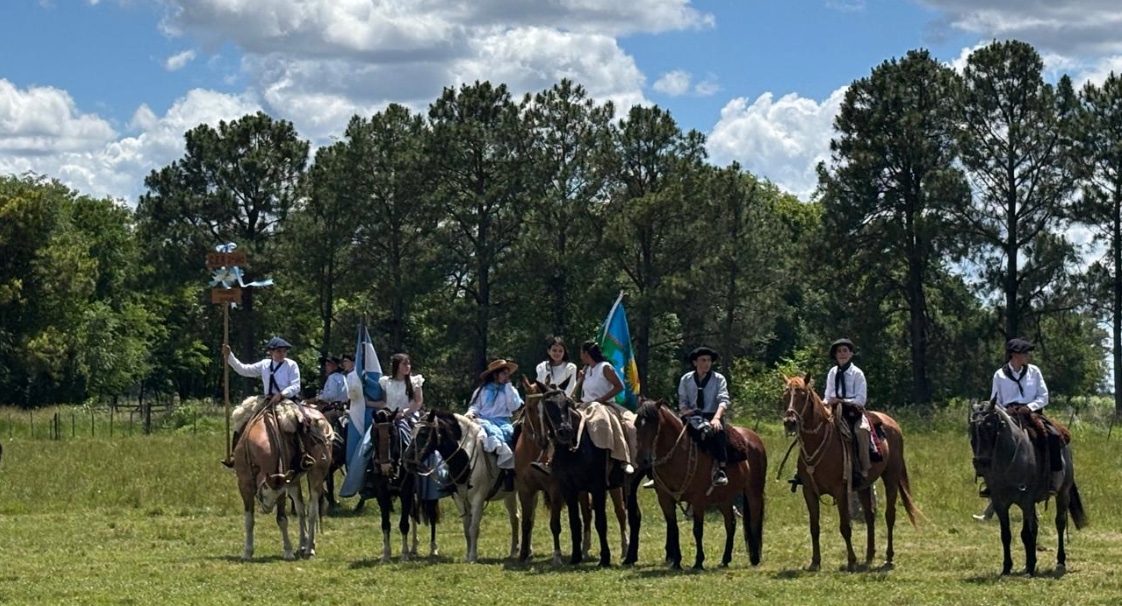
Is it possible to impart education without having received it yourself? Are passion and community involvement more valuable than academics? The journey of Roberto Rossi invites us to reflect on human rights, rural communities and resilience, all in one inspiring story.
Born in 1945 in Merlo, Buenos Aires, he was drawn to learning from a very young age: he had a perfect record for his first three years, and kept it up through sixth grade. By then, he had already moved to Luján and attended school in Villa Espill.
Living by the countryside, it did not take him long to start developing interests outside of school. When he was not sharing time with his and his uncle’s family—both formed by Italian immigrants—or helping his father, he diverted himself to recycling wood, making toys and cars.
However, deep within this creative and childish energy, lay a strong curiosity and willingness to continue learning: willingness that led him to travel to the city, taking four buses each day (or walking a certain distance to save money for some ice cream), to start his first year of technical secondary school. Unfortunately, as was sadly common at the time, the amount of sacrifice it required enabled him to go on for no longer than one year. Motivated by his father, he started working in the family agriculture business, continuing to practice accordion, piano, drawing, smithy and machinery.
Roberto’s work as his father’s legacy was a success: after completing the military service at 20, he completely took over the company at just 22, combating national crises and giving the business a new and innovative focus. By the time he was 28, an agricultural organization had formed in Luján under the name of ARPAE. And when one of his fellow members proposed the idea of founding a rural school in the zone, he was instantly hooked.
The simple words said by his colleague represented an entire life of memories for Roberto: he remembered a past national policy, the AAAA Club, managed by the INTA (National Institute of Agricultural Technology), that inspired kids in rural areas to instigate farming and vegetable gardening, and how important those activities were for him as a kid.
By building a school with those same values and academics in the very neighbourhood he grew up and worked in, he would allow local children to complete secondary school close to home, developing the abilities required to fulfill a profession in agriculture or cattle raising. To him, it meant more than just a proposal: it meant opportunity. The opportunity he never had.
It was for this reason that he knew he had to work to make it happen. And he was not alone: Roberto worked closely with colleagues like Pedro Barnech, Alejandro Pecovich and Raul Mojardin, who were key actors from the idea to the implementation. He knows he could not have made it without them, and thanks them profoundly to this day.
After buying a piece of land, they could finally develop the project they had dreamed about. The “Centro Educativo Rural N° 1” (Rural Educational Center N. 1) opened in 1978 with 11 local students that hadn’t been able to complete secondary education. Now, they had the possibility to pursue it in a place that combined moral and rural values, technical tools, and academic excellence.
The school covers seven years of secondary level, in which students (aged 11 to 19) combine traditional disciplines like Math and English with courses like Forage, Agricultural Mechanics, Swine, Business Organization, and more. Everything they learn, they apply in real life; and by working in the fields, with animals and a vegetable garden, they create actual food and everyday products to then trade with the rest of the community. In fact, graduates leave with more high school diploma: those who complete the 7th year, also get an agricultural technician degree, which reflects the expertise the young students achieve in the field.
Since founding, Roberto has continued to live in the same area, where he raised his two daughters, who now continue his business. And that school, with its countryside-focused education, has now graduated over a thousand students, with many still choosing it every day—like his grandson. This is, for him, one of the biggest prides of his life.
In his words, “Our responsibility as adults is to teach the young how to think freely and use all the tools nature gives us. I think we develop our potential to be better very little. This space has to be the place where we leave selfishness and individualism aside, to work with the community and prioritize not one person, but a group of teaching and learning.”
Roberto revolutionized rural education in Luján, and throughout Argentina–not as an expert, but as someone full of enthusiasm and passion for education, for passing on the knowledge he himself couldn’t get from school. His story reaffirms that traditional academics are far more powerful when combined with passion, innovation, and initiative, and invites us to follow that inherent drive, helping others and making a true difference.